The Problem With Fats And Your Stomach

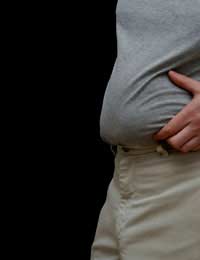
All of us, for the most part, like fatty foods and enjoy hefty roast dinners at the weekend in the presence of our families. It is important to remember that whilst we are doing so we are introducing a potential killer into our systems that can – without warning – take its toll on the internal workings of our stomachs and bowels and have longer lasting ramifications for our digestive systems.
The Problem With too Much Fat
Our body needs a certain amount of fat but too much can have an adverse affect and lead not only to problems with the digestive system but also problems with the heart and the main arteries, which help push blood through the body.Upon entering the stomach the food that we eat begins to break down and from it our bodies take the nutrients and proteins needed to help us push on. Once the food has entered the stomach it then begins the task of breaking it down and extracting the required materials from it; this is done by adding liquids and digestive juices to the food in order to facilitate the breaking down process.
However, should excess levels of fat be found in this food the process of breaking it down can take longer and in some instances may not take place fully, to which end food becomes trapped in the stomach or intestines and additional problems arise.
The body digests the food into the small intestine where the pancreas, liver and intestines absorb the remainder of anything that can be useful from the food before it is finally pushed on. The walls of the intestines absorb these necessary nutrients and proteins and the waste products are then pushed through to the colon for excretion.
This of course sounds all very unpleasant but it is a necessary part of our existence as human beings. However we have a tendency to overlook this when we are enjoying fatty foods and large quantities of meat.
Fatty Food and Your Stomach
During the course of our lives we will – unless we are vegetarian – digest many tons of meat, some of which will collect in our bowels as undigested whilst for the most part it will be expelled in the normal way. But this can only be achieved if the amount of fat is kept down to an acceptable level.Fatty foods, although perhaps difficult to avoid depending on your taste, are the most common way in which the inner workings of the digestive system can be upset and likewise the whole process following digestion can also come under attack.
If you feel that you are eating too many fatty foods consult your doctor as to how to go about cutting them down. The first thing to remember is not to cut things like meat out altogether as the body does need a level of fat to balance out the other proteins and carbohydrates it takes on board. So consulting your doctor and asking for his or her help in coming up with a diet regime can only be a good thing.
It is worth noting however that it is best to do this under doctor’s supervision and not to try and change your diet and lifestyle without the advice of your GP as this can lead to problems further down the line.
- What Are Digestive Genes?
- Broccoli to Fight Tummy Problems
- Digestion and Super Foods
- Fast Foods and Your Tummy
- What You Don't Know About Food Poisoning
- How Vegetarianism Affects Digestion
- How Food Labels Can Be Wrong
- How Your Digestive System Works
- The Effect of Positive Bacteria on Your Stomach
- The Effect of Wheat on the Stomach
- Red Meat and Your Stomach
- Too Much Caffeine and Your Stomach
- Nicotine and your Stomach
- Controlling Irritable Bowel Syndrome with Diet

Re: Symptoms of Stomach Migraines
When I started menopause 8yesrs ago I had my first stomach attack. With me I start to sweat profusely then comes the pain so…
Re: How Cauda Equina Syndrome Affects the Stomach
I have had cauda equina syndrome now for 10 years. For a considerable amount of that time I took…
Re: Symptoms Of Peptic Ulcers
I also have this chest pain and my heart is beating very fast and painfull and the other thing is that my left side breast it pains.i…
Re: Symptoms Of Peptic Ulcers
I was diagnosed of gastric ulcer after I went for an endoscopy. I have used intravenous rabeprazole and now am using ulsakit. But I…
Re: Symptoms Of Peptic Ulcers
Hello guys, first all of you have to visit gi. And done ugd, then only Dr have to came to know what happened inside your stomach. Yes…
Re: What is Thickening of the Bowel?
I had a virtual colonoscopy and was told I had a thickened left colon. I have acute bouts of lower left abdominal pain which…
Re: What is Thickening of the Bowel?
HI CAN SOME BODY TELL ME WHAT MILD SMALL BOWEL VERSUS IN THICENING RELATED TO UNDERDISTENTION MEAN?
Re: Symptoms Of Peptic Ulcers
Princess gold - Your Question:I av ulcer and I feel tiredness, dizzy, pain under my left breast ? Is it still a sign of ulcer ?
Re: Symptoms Of Peptic Ulcers
I av ulcer and I feel tiredness, dizzy, pain under my left breast ? Is it still a sign of ulcer ?
Re: Symptoms Of Peptic Ulcers
ola - Your Question:I have chest pain in my left chest ,sometimes I have pain under the armpit. am just fiftten years of age.I do HV…